




Commercial doors · UK & Ireland
Choosing a commercial door supplier: what to specify before you buy
A commercial door is bought on the drawing and judged on the door closer three years later. This guide covers what to specify when you are sourcing commercial uPVC doors and entrance sets, the questions that separate a manufacturer from a merchant, and what a supply quotation has to contain before you can compare it with another.
The first question
Are you buying from a manufacturer, or from a middleman?
It is the question that decides most of the others. A manufacturer can change a size, a colour, a hardware set or a glazing specification because they are making the door. A reseller can only offer what is in the range they buy from, and every variation becomes a special order with a lead time attached to it.
For a one-off replacement that distinction may not matter. For a project with twenty openings, none of them quite standard, it decides whether the job runs or stalls.
Ask directly
Where is it made?
A straight answer is a good sign.
A straight answer is a good sign.
Can you make this size?
Not “can you get”, but can you make.
Not “can you get”, but can you make.
Who do I ring about a fault?
The maker, or a supply chain.
The maker, or a supply chain.
Can I have a schedule price?
Per opening, not per range.
Per opening, not per range.
Specification
What to specify on a commercial door, and why each one matters
Commercial doors fail at the points that get used, not at the panel. Specify for the traffic and the exposure and most of the common problems never arise.
Traffic volume.
A door on a staff entrance may cycle a few hundred times a day. Hardware rated for domestic use will not survive it, and this is the single most common specification error we see.
A door on a staff entrance may cycle a few hundred times a day. Hardware rated for domestic use will not survive it, and this is the single most common specification error we see.
Opening direction and escape.
Outward opening, panic hardware where it is required, and the interaction with the fire strategy. Decided on the drawing, expensive to change later.
Outward opening, panic hardware where it is required, and the interaction with the fire strategy. Decided on the drawing, expensive to change later.
Threshold.
Level access where it is needed, and a threshold detail that still sheds water. These two requirements pull against each other and are worth resolving early.
Level access where it is needed, and a threshold detail that still sheds water. These two requirements pull against each other and are worth resolving early.
Glazing.
Safety glazing to the critical locations, and vision panels sized for the people using them rather than to a standard.
Safety glazing to the critical locations, and vision panels sized for the people using them rather than to a standard.
Closers and hold-opens.
A door that slams is a door that gets propped. Specify the closer for the leaf weight and the exposure, not as an afterthought.
A door that slams is a door that gets propped. Specify the closer for the leaf weight and the exposure, not as an afterthought.
Access control interface.
If a maglock, strike or reader is going on the door, the frame has to be prepared for it in manufacture.
If a maglock, strike or reader is going on the door, the frame has to be prepared for it in manufacture.
Have a door schedule?
Send it over and we will price it opening by opening
We manufacture to your sizes and hardware specification. Trade and contractor accounts welcome.
Materials
Commercial uPVC doors, and where they are the right choice
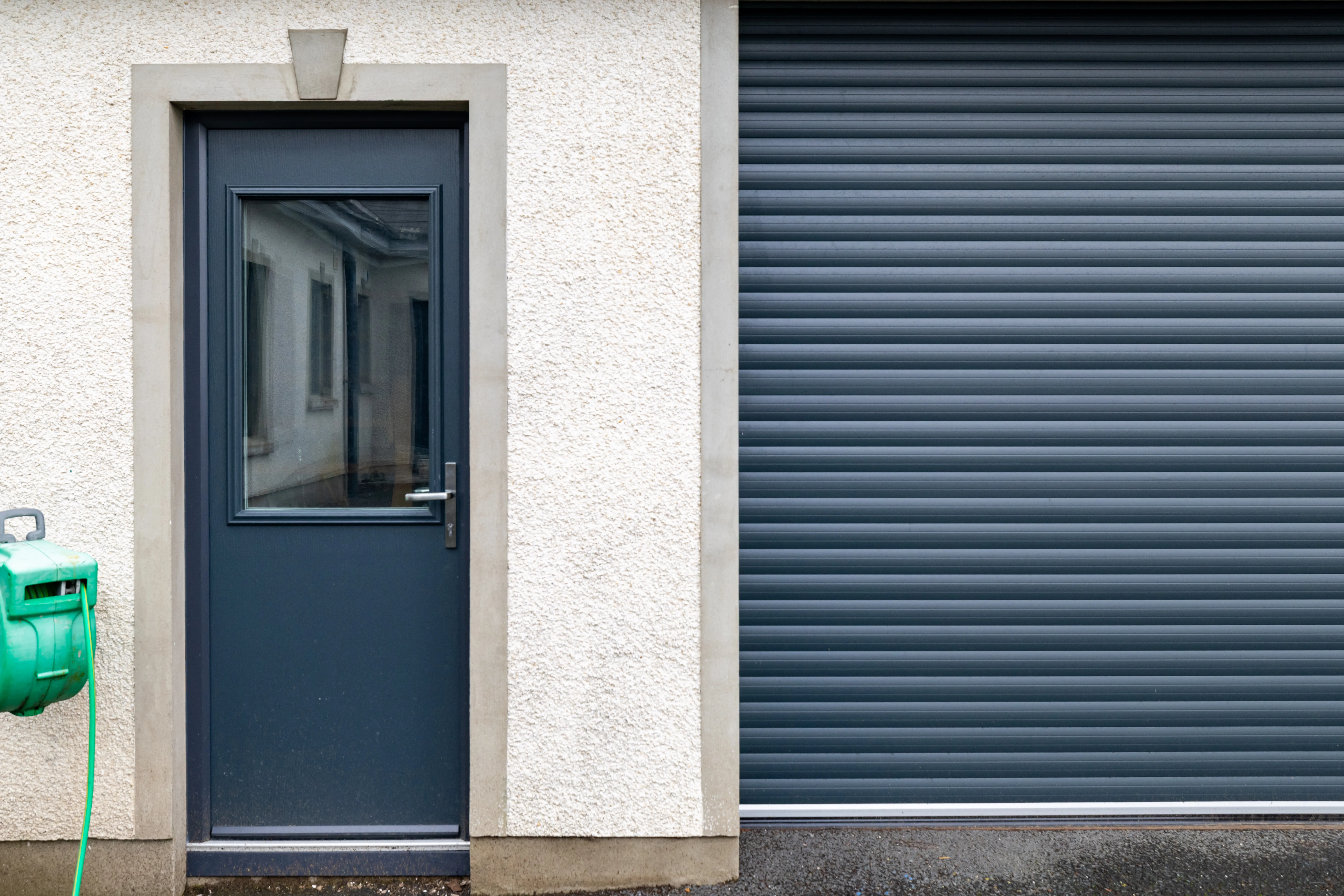
uPVC is not the automatic answer for every commercial opening, and it is worth being clear about where it performs and where another material earns its place.
Where uPVC works well
Rear, service and staff entrances where appearance is secondary to durability
Exposed elevations, because there is nothing to corrode or repaint
Buildings where the maintenance budget is thin and washing down is the whole regime
Multi-occupancy and social housing schemes with repeated openings
Where to look at alternatives
Very large openings, where slim sightlines and spans favour aluminium
Main entrances with heavy public traffic and continuous cycling
Openings with a specific fire or security rating to meet
Conservation settings where the profile has to match an existing style
Supply
What a commercial door supply quotation should contain
Most quotations that cannot be compared are not dishonest, they are simply incomplete. Ask for these and the comparison becomes straightforward.
A price per opening,
against your schedule references, rather than a single project figure.
against your schedule references, rather than a single project figure.
The hardware named,
not “quality hardware”. Cylinders, hinges, closers and locking gear listed.
not “quality hardware”. Cylinders, hinges, closers and locking gear listed.
Glazing specification per door,
including which panes are safety glazing.
including which panes are safety glazing.
Colour and finish inside and out,
confirmed at order stage.
confirmed at order stage.
Lead time from approved drawings,
stated as a working commitment.
stated as a working commitment.
What happens to a fault,
who attends, and how spares are obtained.
who attends, and how spares are obtained.
Common questions
Commercial doors, answered
What is the difference between a commercial door and a domestic one?
Mostly the hardware and the frame, not the panel. A commercial door is specified for a far higher number of opening cycles, often needs to interface with access control or a fire strategy, and frequently has to meet a level access threshold. A domestic door in a commercial setting usually fails at the hinges, the closer or the locking gear long before the door itself gives up.
Are commercial uPVC doors strong enough for a busy entrance?
For staff, service and rear entrances, yes, provided the hardware is specified for the traffic. For a main public entrance cycling continuously all day, or for a very large opening, aluminium is usually the better engineering answer. The material matters less than whether the door has been specified for the use it will actually get.
Can commercial doors be made to non-standard sizes?
If you are buying from a manufacturer, yes. Commercial openings are rarely standard, particularly in older buildings, and making to the surveyed size avoids the packing and filling that causes draughts and early hardware wear. A supplier working from a fixed range will offer the nearest size instead, which is where most fitting problems begin.
How do I choose a commercial door supplier?
Establish first whether they manufacture or resell. Then ask for a price per opening against your schedule, the hardware named rather than described, the lead time from approved drawings, and what happens when a component fails in year three. A supplier who answers all four directly is usually the one who will still be answering the phone later.
Do you supply commercial doors to trade and contractors?
Yes. We manufacture and supply to contractors, fit-out firms and installers across the UK and Ireland, working from your door schedule or from a survey. Trade accounts are arranged directly with us rather than through a distributor.
Can you supply doors and windows for the same project?
Yes, and on a commercial project it is usually simpler. One manufacturer means one schedule, matching colours and sightlines across the elevation, and one point of contact when something needs changing. Our commercial windows and commercial doors are made in the same factory in Ballymoney.
Next step
Send us your door schedule
We will price it opening by opening, with the hardware named and the lead time stated. We have been manufacturing windows and doors for over 30 years from Ballymoney, supplying commercial projects and trade customers across the UK and Ireland.
Call 028 2769 8392 or email info@mrworxltd.com · Unit 11a Ballybrakes Business Park, Ballymoney BT53 6LW